Saturday, December 24, 2016

Creating "How Great Thou Art"

How Great Thou Art
by Robert A. Waters

The song, "How Great Thou Art," is one of the most loved hymns of all time. Describing the majestic power of God, and the joy of knowing Jesus Christ as our Saviour, the song has touched millions of lives since it was written in 1859 by a Swedish poet named Carl Boberg. The lyrics were later set to the music of a Swedish folk song.

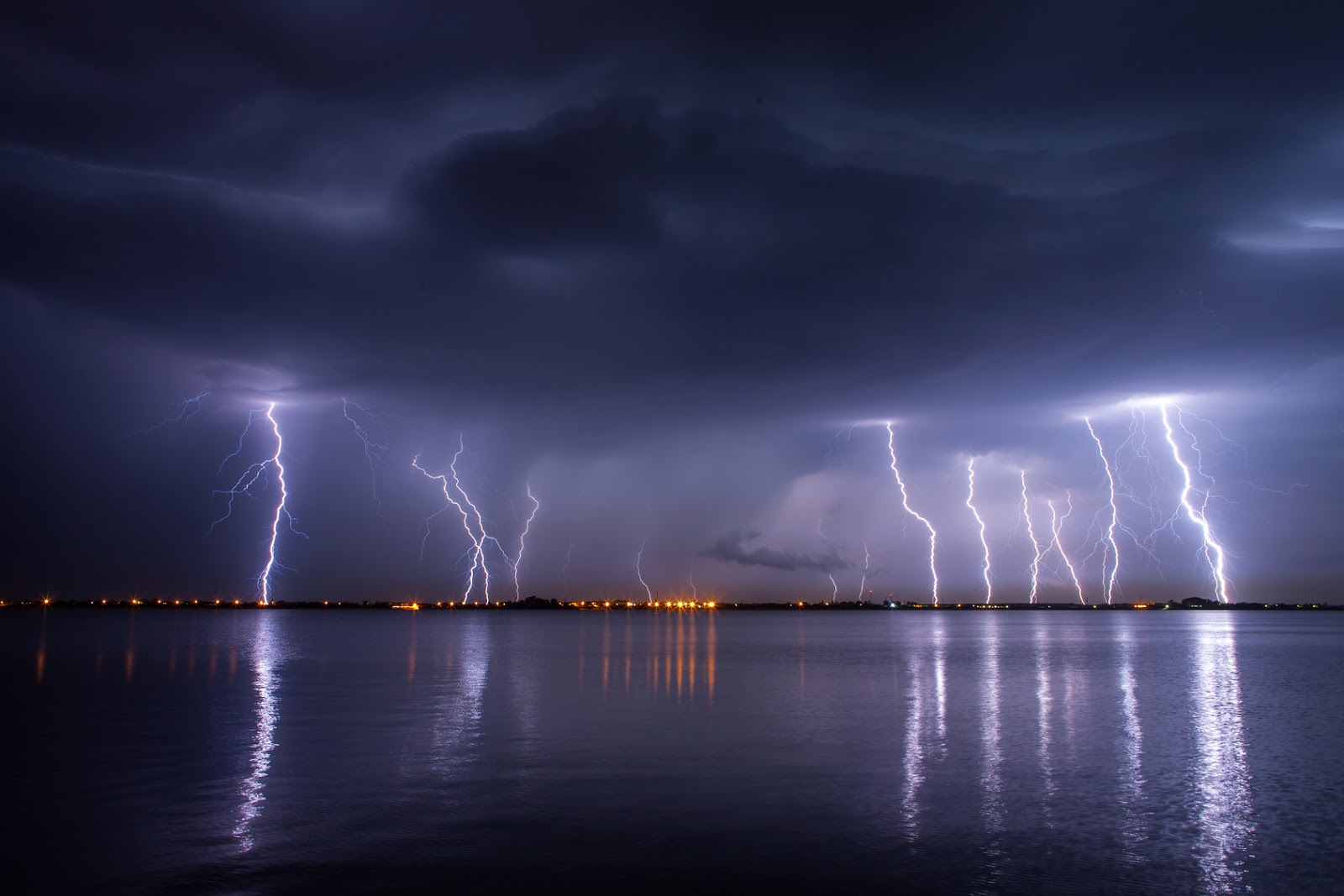
Boberg explained how he came to write the song.  "It was that time of year," he said, "when everything seemed to be in its richest colouring; the birds were singing in trees and everywhere. It was very warm; a thunderstorm appeared on the horizon and soon there was thunder and lightning. We had to hurry to shelter. But the storm was soon over and the clear sky appeared."

The first verse of "How Great Thou Art" describes the above scene:

"Oh Lord my God, when I in awesome wonder

Consider all the worlds thy hands have made,

I see the stars, I hear the rolling thunder

Thy power throughout the universe displayed." 

In 1949, British missionary Stuart K. Hine translated the song into English, updated the lyrics, and added two verses. It was published in the 1973 edition of The Covenant Hymnbook. "How Great Thou Art" was popularized in America by George Beverly Shea and Cliff Barrows during the Billy Graham Crusades of the 1950s.

As Christian faith wanes in modern society, "How Great Thou Art" remains a musical lighthouse for many. Atheism, many of whose adherents view faith as a "poison," threatens to become the new religion. Richard Dawkins wrote: "[Christian] faith is an evil precisely because it requires no justification and brooks no argument."

Yet faith is the stone on which atheists use to hammer out their own theories of the origins of the universe. After trillions of years, they allege, a great explosion rocked the void of nothingness and the universe suddenly formed.  Scientists tell us that never before or after has something come from nothing, but here we are.

Atheists have faith that after the big bang, or whatever generated the universe, complexity arose out of chaos and the vast network of solar systems, stars, and planets formed. It seems almost miraculous.

Sir Isaac Newton is quoted as saying, "Atheism is so senseless. When I look at the solar system, I see the earth at the right distance from the sun to receive the proper amounts of heat and light. This did not happen by chance."

On Planet Earth, everything developed exactly as needed to form life.  Scientists estimate that, on average, every human being is made up of about 37.2 trillion cells. It takes a great deal of faith to believe that the human body formed by itself, out of the blue.

"How Great Thou Art" reminds Christians of the Creator who formed us.

As for atheists, they're free to believe whatever they wish.

"How Great Thou Art" has been sung by hundreds of artists. This version is by Alan Jackson.

https://www.youtube.com/watch?v=MXwrZ2bqHQA


Tuesday, December 20, 2016

Snake vs. Wolf

Chip Jacobs has published several books, mostly about crime in the Los Angeles area.  This excerpt from a story in the recently published book, LA in the 1970s, describes one of the most bizarre cases you'll ever read.  "Snake vs. Wolf" chronicles the true story of crusading lawyer, Paul Morantz, whose efforts to bring down the drug recovery cult Synanon nearly led to his murder at the venom-tipped fangs of a mailbox-dwelling rattlesnake.  I highly recommend this book and have included a link at the end of the this excerpt.

SNAKE VS. WOLF
by Chip Jacobs

Everybody, it seems, was watching the little white house on Bollinger Drive: pretty divorcĂ©es and kids on bikes, electronics whizzes and the Westside LAPD. Everybody was keeping a lookout for suspicious activity at the request of the owner, a feather-haired lawyer sleeping with a shotgun by his bed after the creepy sect he helped expose threatened to pay him a visit. Sure, it sounded melodramatic—killers skulking about a coastal town of rustic stores and quiet streets. And still there was that lurking, green Plymouth carrying two men up front and three friends in the trunk.

A real estate appraiser, who’d just stopped at a nearby corner market for a frosty drink, was the first to be flummoxed by it. Here he was, idling behind the sedan at a Pacific Palisades red light, unable to decipher its newfangled vanity license plate: 27 IVC. What narcissistic gloat could that represent? At twenty-seven I varoomed to California? Something about Ventura County? His puzzle-solving brain worked the variations. Then, by looking closer, Les Rahymer knew.

This wasn’t cutesy, aluminum-engraved conceit. This was deception. Lamely applied blue tape—tape the same ubiquitous hue as the plates’ background—concealed a “4” before the “27” and blurred the “G” into a “C”. Rahymer, a dark-haired thirty-something, sat in his black Datsun 280Z, prickled with goose bumps. What was he supposed to do when the Plymouth motored nonchalantly down Baylor Avenue: tail it like a real-life Jim Rockford (whose series filmed blocks away)? No, he was supposed to glimpse into his rearview mirror, where, by sheer happenstance, a Los Angeles Police Department patrol car was whipping left onto Sunset Boulevard like him.

“Did you see that car with the altered license plates?” Rahymer blurted, after waving the officer over. “Write down these numbers before I forget them.” David Ybarro jotted as told and even sketched passengers’ likenesses from the good samaritan’s account. It was a wickedly hot October afternoon, a day before the World Series opened at Dodger Stadium amid bunting and beer commercials.

Wait! Did he say a drab, early-seventies-model Plymouth Executive? If so, Ybarro himself had noticed the car earlier while serving an unrelated subpoena, figuring it for an undercover narcotics vehicle pursuing stoners and snow-white tans. Dispatch reported the car was registered to the group Synanon at its Marin County outpost.

Shazbot, as the kids said: not good. Especially after the dude in the Japanese import took off before Ybarro learned the driver’s name.

Ybarro, who walked a beat in this sun-glistened suburb a few minutes from Will Rogers State Beach, whistled for backup. Two LAPD colleagues, who arrived to hear him out, left, apparently unconcerned. Another pair drove past the lawyer’s range-style home on Bollinger with bougainvillea out back, observing nothing afoul. But Ybarro couldn’t shake the eerie butterflies. A few minutes later he was on Bollinger, telling a bike-riding boy to holler if he spotted the Plymouth. At shift’s end, he logged his experience.

Only the next day would the report surface—in a department trash can, ignored.

https://www.amazon.com/Los-Angeles-1970s-Scenes-Goldmine/dp/1942600712


Wednesday, November 16, 2016

A Must-Read Defensive Shooting Story

Law-abiding Citizen Saves Deputy's Life

At Exit 123 on I-75 in Florida, a savage attack on Lee County Sheriff's Deputy Dean Bardes ended with gunfire. The assailant lay dead, beside the injured cop.

It started with a traffic chase when Edward Strother almost hit Deputy Bardes as he conducted a traffic stop. Bardes began pursuing Strother and soon the cars were speeding at more than 100 miles per hour. Strother eventually pulled over, but quickly attacked the deputy. Knocking him to the ground, Strother began beating Deputy Bardes.

It was then that a citizen with a concealed carry permit stopped to help. Pulling his gun, the Samaritan ordered the assailant to stop. In the meantime, Bardes screamed for the unidentified permit holder to shoot. Three shots later, Strother lay dead.

Yesterday, Lee County Sheriff Mike Scott released this statement about the shooting:

"Earlier this week, two heroes met on I-75 and while they had never met before, one would save the others life. I was at the hospital when the ambulance arrived, the rear doors opened, and my Deputy Dean Bardes was unloaded on a stretcher. Bloody from a vicious attack by a driver Bardes had stopped for endangering the lives of other innocent citizens in our community, the Medics wheeled him into a treatment room. Joined by others from our team, I was there when his wife and family arrived with fear and concern for their loved one as the E.R. team worked on him. Ironically, this was the first day in a while that Deputy Bardes was alone on patrol because as a Field Training Officer, he typically has a recruit riding with him to learn the business. A business that has seen an increasingly alarming rise in attacks and killings perpetrated on cops. A business that has fallen victim to false narratives like Ferguson where the good guys have been painted as the bad guys by a vocal minority that refuses to allow facts and evidence to get in their way. A business that is the last line of defense between good and evil.

"On behalf of the men and women of the LCSO, I thank Deputy Dean Bardes for his bravery and pray for a full recovery. I thank the E.R. staff and E.M.S. for their immediate attention to Dean, and I thank the many witnesses to this event who stopped to assist our Detectives. I thank my good friends at “Shoot Straight” who realized that the hero’s gun was taken as evidence and immediately gave him a brand new firearm. Above all, I thank the hero that recognized the imminent threat, rushed to Deputy Bardes’ aid, and ultimately stopped that threat. In a day and age where race is a near instant focus for media and other pundits in police incidents, the fact is that this hero happens to be a man of color who stopped another man of color from further harming or killing a white cop; thereby reminding us that black lives matter, blue lives matter, and indeed all life matters. We at your Sheriff’s Office remain proud to serve and focused on the mission."


Tuesday, November 8, 2016

Sherri Papini Missing


Friday, November 4, 2016

Amber Alert for Kayla Gomez

Kayla Gomez
Amber Alert for Kayla Gomez

On Tuesday, November 1, 10-year-old Kayla Gomez vanished from the First Assembly of God Church in Bullard, Texas. A massive search for the missing girl is currently underway by local, state, and federal law enforcement officials.

There is a reward of $13,000.

Gomez is four-feet tall, and weighs 90 pounds. She has brown hair and brown eyes, and was last seen wearing a peach-colored skirt and black "Racquet and Jog" T-shirt.

If you have any information regarding the whereabouts of Kayla Gomez, please call the FBI Tip Line at (972) 559-5711; the Cherokee County Sheriff's Office at (903) 683-2271; Bullard Police Department at (903) 894-7788; or Cherokee County Crime Stoppers at (903) 586-7867 (STOP).

Wednesday, October 12, 2016

Who Murdered Terri Bevers?
By Robert A. Waters

It's been six months since an intruder broke into the Creekside Church of Christ in Midlothian, Texas and murdered 45-year-old Terri “Missy” Bevers. No arrests have been made, and no clear motive has been established.

At 4:18 A.M. on April 18, 2016, Bevers arrived at the church to prepare for the boot camp-style workout class she had scheduled for five o'clock that morning. Little did the pretty blonde-haired wife and mother know that she wasn't the only person inside the church. Camera footage captured a frightening sequence just before Bevers was found dead.

For nearly a half-hour, an individual dressed in a fake police SWAT Team uniform wandered through the church, smashing windows with a hammer-like object. Video seemed to indicate the intruder may also have carried a screwdriver or ice-pick. Midlothian police announced that the unknown vandal stood between five-feet-two and five-feet-seven inches tall and seemed to have a burly build. Surveillance video showed that the trespasser walked with an unusual “duck-like” gait.

Asked whether the intruder was male or female, Midlothian Assistant Police Chief Kevin Johnson said, “Man, I'd love to be able to answer that question.” In this age of Internet, social media, cell phones, and instantaneous news, many have speculated that the killer may have been a woman. Once police confirmed that Bevers had sent “flirtatious and familiar” messages on her cell phone to someone other than her husband, the blogs and crime websites exploded. Online bloggers focused almost exclusively on this alleged affair as a possible motive for the killing. But Chief Johnson recently told reporters that “the love-triangle thing is really not panning out so far.”

Johnson also indicated that all family members have been eliminated as suspects. Her husband, Brandon Bevers, was in Mississippi during the time the murder took place, but that didn't stop the armchair detectives from blaming him. One respondent to a news article on the case wrote: “Obviously she was killed by her father-in-law, with planning from her husband. This is clear as day; a domestic, family murder, in cold blood. 'Husband off on a fishing trip,' the oldest cover-up story in the book!”

The reason this correspondent included Missy's father-in-law, Randy Bevers, in on the murder plot seemed to be because he had taken a blood-stained shirt to the dry-cleaners. Randy informed reporters and police that his chihuahua dog had been killed in a fight with another dog, and that he got blood on his shirt taking his dog to the veternarian. Police later confirmed the story, but not before the online detectives had tried and convicted him of Missy's murder.

Other armchair crime devotees blamed social media. Bevers had posted her agenda on Facebook, with the admonition that even if it rained, the fitness session would be held inside the church, rather than outside, as scheduled. “Echoing other comments,” wrote another respondent, “Facebook is the best gift that thieves and others that are up to no-good have ever been given.” There is a lot of truth to that statement, but there is no proof that Missy's killer even knew about her Facebook page.

Investigators now seem to be concentrating their investigation on a stranger. They released video of the intruder in hopes that someone would recognize the attire he wore, as well as his (or her) walk. So far, no one has come forward to identify the intruder.

If you have information about this case, please call Midlothian Police at 972-775-3333 or Ellis County Crime Stoppers at 972-937-7297. There is a $10,000 reward.

Tuesday, September 27, 2016

The 11 Saddest Country Songs of All Time
by Robert A. Waters

Rolling Stone magazine recently released what it called the “40 Saddest Country Songs of All Time.” On the premise that “even a blind hog finds an acorn once in a while,” they found a few good ones. Unfortunately, there were too many modern-day songs and not enough older and alternative tunes. Those who have read my blog for very long know that one of my passions is old-time hillbilly music. It's what I grew up hearing and what I still listen to. So here are 11 songs the Rolling Stone article left out.

Hank Williams III
Hank III does his best to live up to his grandfather's name. Hard living, hard drugging, and hard drinking seems to be the norm of the Williams clan, but they have country music embedded in their DNA. This song is straight country, and straight-out sad. No wonder it never made a blip on the modern CMT charts.

Hank Williams
Written by the blind country songwriter, Leon Payne, this song is the defining statement about Hank's life. It's ironic since Hank wrote most of his own songs. In many religious songs, there is redemption for sin, but in this song, there is no redemption—the singer is going straight to Hell. This is real country music written by real country people who had, fortunately, never heard “Imagine” by the Beatles.

Amber Digby and Justin Trevino
These Texas-based singers nail this old “cheating” song. Their version has the feel of, shall we say, authenticity. In other words, it sounds like they've been there, done that (not saying they have, just saying the song has that “feel”). Written by L. E. White, numerous country stars have recorded it, including Loretta Lynn and Conway Twitty, Willie Nelson, and Tanya Tucker. But their versions are too commercial. I like the Digby and Trevino raw, gritty version best.

Johnny Cash
Ted Daffan, a honky-tonk singer and songwriter, penned this song in the 1940s. It's been recorded by more than 100 country singers, including this version by Johnny Cash. “Born to lose, I've lived my life in vain/Every dream has only caused me pain...” Any song with those opening lines has to be sad and has to be country.

Stonewall Jackson
Rolling Stone would NEVER admit that a descendant of the great Southern General Thomas Jonathan “Stonewall” Jackson could be a great country singer. But that he is. “Leona” is written from the perspective of a cuckolded husband and the tragic conclusion is right out of today's headlines. Stonewall Jackson, the singer, had many hit songs, including “Waterloo,” which crossed to the pop charts. Written by the well-known Nashville songwriter, Cindy Walker, “Leona” never became a hit, but is still one of my favorites.

Dwight Yoakam and Ralph Stanley
Penned by country songwriters Jack Anglin, Johnny Wright, and George Peck, this song is about a soldier going off to war. If he comes back, he is reminded to meet his sweetheart “down where the river bends.” Dwight Yoakam and Ralph Stanley perform this bluegrass version of the song, and Stanley's high tenor is guaranteed to send chills down your spine.

Hank Williams
Written by Hank, this song became a number one country hit for him, then crossed into the pop charts to become Tony Bennett's first number one song. Hundreds of singers have recorded it, and the song has become a standard, usually delivered with minimal feeling.  Not so, Hank's version.  The pain of his loss is raw and vicious and we know there'll be no happy endings here.  (How Rolling Stone could miss this song, I don't know.)

Vernon Oxford
This song is a lament about a life gone wrong by the singer who was called “too country for country music.” While modern “country” singers listen to the Beatles, the Stones, Jimi Hendrix, and rap, Oxford cut his teeth on real hillbilly music—mostly Hank. God is the last resort for many a former reprobate, and the title of this song says it all.

San Francisco Mabel Joy
Mickey Newberry
Any songwriter who can come up with a title like “She Even Woke Me up to Say Goodbye,” has to be good. Add to that “San Francisco Mabel Joy,” about a Georgia boy who falls for a prostitute, kills her lover, and ends up doing 99 years in prison, and you've got the makings of real country music. It's a long, rambling song that could never make it onto the country music charts.

Texas singer/songwriter Clark begins this song with these lines: “That old time feeling goes sneaking down the hall/like an old gray cat in winter keeping close to the wall...” Need I say more?

Hank Williams
This is arguably the greatest country song of all time. Hank allegedly wrote it about his cheating wife, Aubrey. Of course, the cheating was mutual, but... This song has been recorded by almost every country singer in history. The pain is palpable as Hank sings, “Your cheatin' heart will tell on you.” Hank, who grew up dirt-poor in Alabama, achieved fame and fortune beyond his wildest imaginings, but was tormented by physical and emotional pain all his life. His songs have been recorded by almost all country singers, and many pop crooners. Going barefoot while selling peanuts during the Depression, he could never have imagined the musical influence he would exert. The writer of the Rolling Stone article should be canned for not including this song.

Saturday, September 10, 2016

The Songbirds Stopped Singing at Shiloh
by Robert A. Waters

On a gloomy spring morning in southern Tennessee, the songbirds stopped singing. It was April 6, 1862. Scattered gunfire erupted, quickly becoming a continual roar as two armies slammed into each other. The weather was cool and the rain unrelenting as the thunder of war drowned out thunder from the skies.

Soldiers fell by the hundreds, then thousands, on muddy battlefields, their screams, their dying gasps overwhelmed by the din of fighting. A blog entitled Oddly Historical described the scene: “The bloodiest battle up to that point in the war, two days of fighting produced 23,000 casualties on both sides. The battlefield itself was a boggy, mud soaked hellhole. Medical services on both Confederate and Union sides were woefully unprepared for the scale of the slaughter, and many wounded were left to fend for themselves among the watery morass.”

Primitive medical methods consisted mainly of amputation. There were no antibiotics and no anesthesia. Before their limbs were sawed off, soldiers would take a swig of whiskey, then “bite the bullet.” Shock killed thousands, and infection even more.

But as the Battle of Shiloh ebbed, a medical mystery began to play itself out. Overnight, hundreds of soldiers from both sides, lying in those marshy pools, miraculously began to heal. These soldiers noticed that their wounds would glow green, and then the healing would begin. The grateful men called the strange-colored healing agent “Angel's Glow,” attributing their miraculous cures to divine intervention.

Historians and medical researchers of later years discounted these claims as legend. But a grain of doubt always clouded any assertions that the healings were false. Why did hundreds, if not thousands, of soldiers suddenly recover from their wounds at Shiloh when less severely wounded men died?

Enter microbiologist Phyllis Martin. When her teenage son visited Shiloh Battlefield, his curiosity was piqued. At the time, Martin was researching the healing properties of a bacteria called P. luminescens. With the help of her son, Bill, and his friend, John Curtis, Martin made a remarkable discovery that might explain the historical mystery. P. luminescens lives inside nematodes of the soil. These nematodes eat insect larva and P. luminescens releases toxins that kill the larva. The toxins of P. luminscens also inhibit the growth of deadly bacteria. And P. luminescens glows green as it does its work. Martin theorized that this “glowing bacteria entered soldiers' wounds when nematodes attacked the insect larva [that] are naturally attracted to such injuries. The resulting infestation would wipe out any of the normal, disease causing bacteria found in wounds.”

On the battlefield, wounded soldiers likely cursed the mud-soaked misery of impending death. What they didn't know was that the very conditions they found abominable may have been the conditions that healed them.

Some of these soldiers survived the war and told their families about “Angel's Glow,” and how it saved their lives. While scientists scoffed, the stories became part of the folklore of war. Now there seems to have been a basis of truth to the bizarre assertions.

Sunday, September 4, 2016

Army Veteran John Hendricks Stopped a Mass Shooting
Victims' Lives Matter
by Robert A. Waters

The lives of innocent victims matter. That's why almost 13 million Americans now have permits to carry concealed weapons. Many would-be victims, going about their day-to-day activities, have used guns to successfully defend their own lives as well as the lives of others. Here a few of their stories.

In Chicago, an Uber driver with a permit to carry a concealed weapon stopped a mass shooting. At approximately 11:30 p.m., Everardo Custodio opened fire into a crowd of pedestrians. John Hendricks, the Uber driver, who just happened to be at the scene where the shooting took place, pulled out his own gun and fired six rounds at Custodio. Hit in the shin, thigh, and abdomen, the shooter collapsed on the street. He was taken to the hospital with non-life-threatening wounds. No one in the crowd was hit by gunfire. Hendricks, an army veteran who has a concealed carry permit and valid firearms identification card, was not charged. Custodio, however, will be indicted on numerous counts, including attempted murder.

In Augusta, Georgia, two long-time crooks attempted to hold up the Subway restaurant on Gordon Highway. Howard Maurice Harris and Cornelius Lamar Harrison allegedly entered the sandwich shop armed with crow bars. One of the suspects ordered a 14-year-old customer to go to the back of the business. The suspect then struck the teen in the back of the head with the metal bar, injuring him. The boy's mother, an employee, retrieved a handgun from her purse and fired at the assailant. The robbers fled, but the employee ran outside and fired again. At some point, Harrison was struck in the abdomen. He died a few hours later. Police were soon summoned to a local hospital where they found Harris and arrested him. The injured teen received numerous stitches to close his wounds. Both suspects were wanted in North Carolina for various crimes. Police told reporters that the employee, who had a permit to carry a concealed weapon, will not be charged.

A 91-year-old Eastpointe, Michigan man parked his car in a Rite Aid store parking lot. As soon as he stepped out, he was approached by Richard Ashford who, according to the intended victim, was acting “erratically.” When the victim attempted to retreat back into his car, Ashford approached in a threatening manner, carrying a “piece of metal fashioned as a weapon.” After shouting several warnings, the intended victim opened fire. Prosecutor Eric Smith told reporters that “this elderly man’s self-defense is an entirely appropriate use of force. Facing imminent assault, he announced that he was armed, made attempts to withdraw, warned again that he held a weapon, and fired only when completely necessary.” The intended victim had a concealed carry permit and was not charged. “This is a textbook case for why concealed pistol licenses are issued in the first place,” Smith said. “American citizens have the right to protect themselves in the face of clear assault.” Ashford faces several charges.

In South King County, Washington, Steven Blacktongue, wearing a mask, entered a 7-11 store and attacked a customer with a hatchet. He then moved behind the counter and struck the clerk in the abdomen with the deadly weapon. The customer, who had a permit to carry a gun, shot Blacktongue dead before he could cause serious injury to the clerk. Blacktongue had a long criminal history of felonious assaults, and had served time in prison for assault and drug offenses. The customer who stopped what could have been a brutal murder will not be charged.

And so it goes. Day after day, law-abiding citizens who have permits to carry concealed weapons stop violent criminals. And day after day, the New York Times and other major news organizations refuse to carry their stories.

Monday, August 29, 2016

Help Identify the East Area Rapist/Golden State Killer

Contact Information
FBI Sacramento
Public Affairs Specialist Gina Swankie
(916) 977-2285

FBI Announces $50,000 Reward and National Campaign to Identify East Area Rapist/Golden State Killer

Today, the Federal Bureau of Investigation, Sacramento County Sheriff’s Department, Sacramento County District Attorney’s Office, and Contra Costa Sheriff’s Department held a press conference to announce the launch of a reward and national campaign to help identify the East Area Rapist/Golden State Killer, a violent serial burglar, rapist, and murderer who terrorized multiple communities in California throughout the 1970s and 1980s.

The digital media campaign includes the launch of a webpage, www.fbi.gov/EastAreaRapist; digital billboards throughout the country; social media outreach on Twitter, Facebook, and YouTube; and audio broadcasts via podcasts and radio PSAs. The public can play an active role in helping law enforcement find the subject by sharing links to the website and official social media content.Law enforcement asks the public to consider the following information when reviewing information about the case:
  • Did they live in one of the areas of criminal activity and remember someone in the area who matches the physical description of the subject or may have been known to spend a considerable amount of time in the areas?
  • Have they discovered a hidden collection of items among the belongings of a friend or family member—notably coins and jewelry—as described on the FBI webpage about the crimes?
The subject, who may be 60-75 years old now, was described as a white male standing approximately 5’10” tall and having blond or light brown hair and an athletic build. He may have had an interest or training in military or law enforcement techniques, as he was familiar and proficient with firearms.

People who know the subject may not believe him capable of such crimes. He may not have exhibited violent tendencies or have a criminal history.

Detectives have DNA evidence from some of the crime scenes that can either positively link or exclude a suspect. This enables investigators to quickly exclude innocent parties, and the public should not hesitate to provide information—even if it is the name or address of an individual who resided in the areas of the crimes—as many parties will be quickly excluded by a simple, non-invasive test.

Between 1976 and 1986, this single subject committed 12 homicides, approximately 45 rapes, and multiple residential burglaries in the state of California. All the crimes have been linked by DNA and/or details of the crimes. His victims ranged in age from 13 to 41 and included women home alone, woman at home with their children, and couples.

The subject was active in the greater Sacramento area from June 1976 to February 1978.

Burglaries and rapes began occurring in the Sacramento area during the summer of 1976. During these crimes, the subject would ransack the homes of his victims and take small items such as coins, jewelry, and identification. These cases include the homes of families, couples, and single women; burglaries in a neighborhood tended to precede clusters of sexual assaults. On February 2, 1978, Rancho Cordova couple Sergeant Brian Maggiore and his wife, Katie, were on an evening walk with their dog and were chased by the subject who overcame the couple and shot at close range.

His activity continued primarily in the East Bay Area of Northern California in 1979, and, by October 1979, his activity escalated into rapes and homicides/attempted homicides along the California Coast with homicides in Goleta (October 10, 1979; December 3, 1979; and July 27, 1981); Ventura (March 16, 1980); Laguna Niguel (August 19, 1980); and Irvine (February 6, 1981 and May 5, 1986). During the commission of the homicides, the subject tied up both victims, raped the female victim, and then murdered the couple.

After July 1981, no associated incidents are known to have been reported for five years. In 1986, an 18-year-old woman was raped and murdered in Irvine. No additional crimes have been connected to the subject after this incident.

A graphic illustrating the general location of these crimes is available on the FBI’s webpage.

The following is a listing of local law enforcement agencies who have investigated a crime believed to have been committed by the subject and the number of crimes in their jurisdictions:

AgencySex AssaultsHomicides
Sacramento County Sheriff’s Department24Two
Sacramento Police DepartmentFourOne assault with a deadly weapon
Contra Costa Sheriff’s DepartmentFiveNone
Concord Police DepartmentTwoNone
David Police DepartmentThreeNone
Fremont Police DepartmentOneNone
Modesto Police DepartmentTwoNone
San Jose Police DepartmentTwoNone
Stockton Police DepartmentTwoNone
Walnut Creek Police DepartmentTwoNone
Irvine Police DepartmentNoneTwo
Orange County Sheriff’s DepartmentNoneTwo
Santa Barbara County Sheriff’s DepartmentNoneFour, two attempted
Ventura Police DepartmentNoneTwo

Today, the Federal Bureau of Investigation, Sacramento County Sheriffs Department held a press conference to announce the launch of a reward and national campaign to help identify the East Area Rapist/Golden State Killer, a violent serial burglar, rapist, and murderer who terrorized multiple communities in California throughout the 1970s and 1980s.  The FBI and its law enforcement partners are seeking the public’s assistance with information about an unknown individual known as the East Area Rapist/Golden State Killer. Between 1976 and 1986, this individual was responsible for approximately 45 rapes, 12 homicides, and multiple residential burglaries throughout California.
The FBI and its law enforcement partners are seeking the public’s assistance with information about an unknown individual known as the East Area Rapist/Golden State Killer. Between 1976 and 1986, this individual was responsible for approximately 45 rapes, 12 homicides, and multiple residential burglaries throughout California.
Law enforcement is seeking any information that may help identify the subject, dubbed the East Area Rapist in Sacramento. He has also been called the Original Night Stalker, Diamond Knot Killer, and, more recently, the Golden State Killer. Individuals with information about the subject may call 1-800-CALL-FBI (1-800-225-5324). Additionally, information may be submitted to the FBI’s online tip line at tips.fbi.gov.